Don't leave your performance tuning to chance. Let the experts at
Java Performance Tuning help train your staff to recognize and correct
performance problems throughout the entire application development lifecycle.
Java Performance Tuning is currently offering these courses designed to
enhance your staff knowledge of the issues and solutions surrounding
many performance problems.
Our recommended 5 day course, consisting of JPT501, JPT510, JPT520, JPT521, covers the full
gamut of performance tools and techniques currently available through our training courses.
All courses are approximately 50% lab work and 50% lecture
We can provide our courses at your organization's facilities,
optimizing your time by eliminating the need and expense of travel.
We also have public offerings, please see our
schedule
|
JPT501: Performance Tools & Methodology for the J2EE and J2SE Printer friendly PDF version
|
Course Description:
This course provides an introduction to various types of performance tuning tools such as load testers, JVM
profilers, J2EE monitors, JDBC tracers, heap activity viewers and OS monitors. The course shows how to best use
these tools to identify and resolve application performance problems. Topics included in the course include:
- Recognize which tools to use to identify bottlenecks in Java applications
- Analyze application performance with performance tools
- Create test cases
- Identify application/database inefficiencies
- Recognize which tools to use to identify bottlenecks in Java applications
- Know how to monitor applications.
This course is intended to provide an overview of a number of tools available to the performance tune applications
Format: 1 day of Lectures with Instructor led labs.
Audience:
Administrators, QA team members, developers, architects, consultants, IT specialists and those with an understanding
of developing applications with Java and the J2EE.
Course Outline:
- Basic Tools
- Timers & Logging
- Common Problems
- Load Testing Tools
- Load Testing Techniques
- JVM Profilers
- Heap Activity Monitors
- Network Monitoring
- JDBC Tracing
- J2EE Monitoring
- Post-Deployment Monitoring
- OS Monitoring
- Applying combinations of tools to troubleshoot Java performance problems
|
|
|
JPT405: Java Performance Tuning Process Printer friendly PDF version
|
Course Description:
This course provides an introduction to the process of performance tuning Java systems, including
planning for performance, building a performance testing and tuning environment, tools, tuning
methodology, system constraints and an overview of how performance is affected by the runtime Java
environment. This course is essential in understanding how to most effectively tune any Java application.
Topics included in the course are:
- To plan for performance management of the project
- To anticipate when performance tuning will be required
- To build a performance tuning environment
- How to understand which aspects of performance tuning are affected by various project phases and components
Format: 1 day of Lectures with Instructor led labs.
Audience:
QA team members, developers, architects, consultants, IT specialists and those with an understanding
of object oriented systems and Java.
Course Outline:
- Java Runtime Environment & System Constraints
- JVM runtime overheads, JIT costs and advantages
- JVM memory management overheads
- Components of Application Startup Time
- Hardware and Operating System Constraints
- Performance Planning
- Setting Specifications
- Performance Objectives
- Specifying Variations and Coverage
- When To Optimize
- Benchmarks (micro and macro)
- How to optimize: the tuning process
- Profiling and Monitoring Tools: Tools for finding bottlenecks
|
|
|
JPT510: Java Performance Coding Best Practices for the J2SE and J2EE Printer friendly PDF version
|
Course Description:
This two day course enables the student to understand the core performance tuning procedures and the most common good
practice tuning techniques to apply to Java applications. The course includes:
- Best Practice Tuning Techniques
- Best Practice Coding for Performance
Format: 2 days of Lectures with Instructor led labs.
Audience:
QA team members, developers, architects, consultants, IT specialists and those with a basic
understanding of object oriented systems and Java..
Course Outline:
- Tuning Methodology
- Users perceptions on performance
- Where to target tuning
- Quickly finding the big gains
- Control structures, looping, method calls etc.
- Object lifecycle
- Casts
- Exceptions
- String handling
- I/O, NIO
- Logging
- Threading
- Serialization/Cloning
- Collections
- Parsing
- JNI native calls
|
|
|
JPT520: Fundamentals Garbage Collection and Heap Tuning (J2SE and J2EE edition) Printer friendly PDF version
|
Course Description:
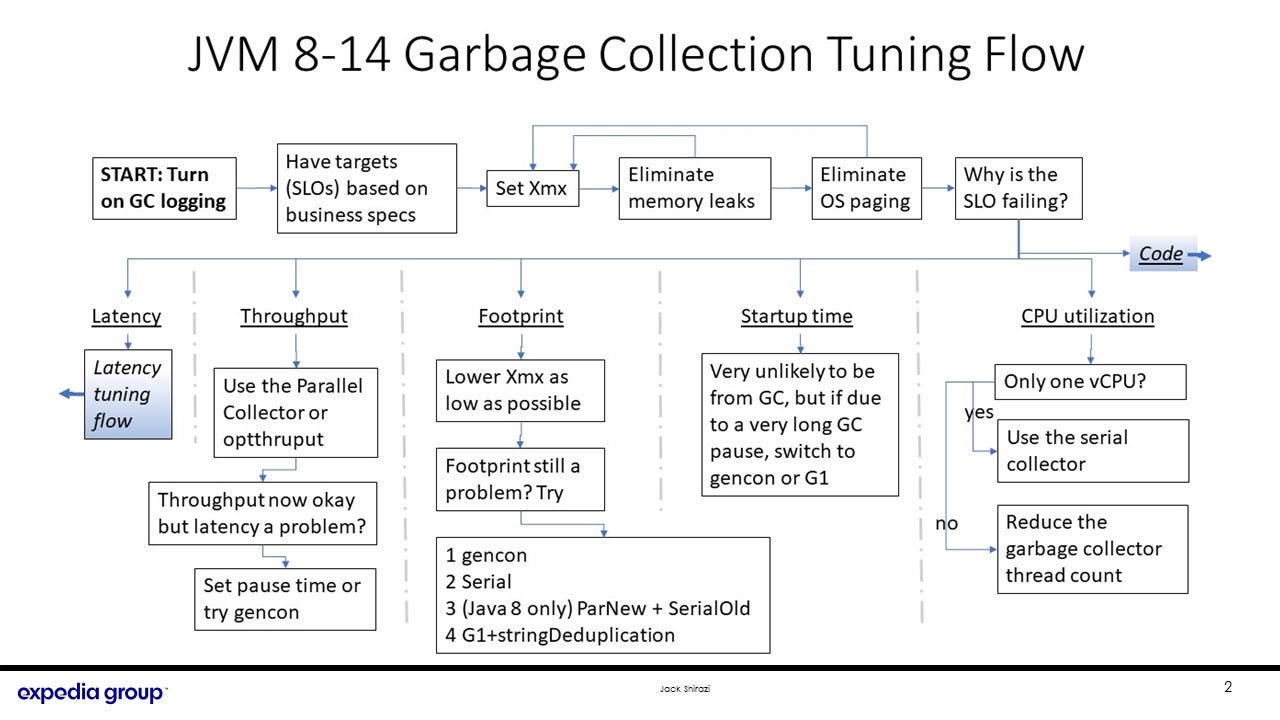
This one-day course enables participants to quickly understand the factors involved in JVM garbage
collection handling and how those factors affect JVM heap space. The course shows how to use various
tools to collect and analyze garbage collection statistics in order to optimize application performance
by tuning the JVM heap space. The course includes:
- The components of JVM heap space and their relevance.
- How JVM garbage collection works.
- How to gather JVM garbage collection statistics.
- How to interpret garbage collection statistics to identify inefficiencies.
- How to tune the heap spaces for optimal performance.
Format: 1 day of Lectures with Instructor led labs.
Audience:
Administrators, QA team members, developers, architects, consultants, IT specialists and those with a basic
understanding of object oriented systems and Java..
Course Outline:
- JVM memory Spaces
- Object Lifecycles
- Garbage Collection Algorithms
- JVM Command-line Switches
- Memory Profilers
- Understanding GC Log Entries
- Gross-Tuning the Heap
- Exercises designed to enforce concepts.
|
|
|
JPT521: Architecting & Designing for Performance Printer friendly PDF version
|
Course Description:
This one-day course is designed to highlight architectural and design
decision that can have a major positive and/or negative impact on
performance and scalability. The course will teach:
- How to design and architect and design high performance applications.
- How to identify aspects that need to be avoided in order to obtain optimum efficiency.
Format: 1 day of Lectures with Instructor led labs.
Audience:
Developers, architects, consultants, IT specialists and those with an
understanding of developing applications with Java and the J2EE.
Course Outline:
- Overview
- Performance idioms
- Contention
- Design
- Planning for Performance
- Performance Anti-patterns
- Performance Optimizing Patterns
- High Performance Architecture
- Enterprise Java Beans
- EJB Patterns
- EJB Servers
- Messaging
- Exercises designed to enforce concepts.
|
|